What’s Inside
The World Before NATO
An alliance forged not from ideology alone, but from the lived trauma of two catastrophic world wars within a single generation.
Thirty Years of Catastrophe
NATO did not emerge from abstract theory. It emerged from blood. Two world wars within thirty years had devastated Europe, killing tens of millions and demonstrating that European nations could not maintain peace without external frameworks of collective security. The interwar failure of the League of Nations — a body the United States never even joined — exposed how democracies can fail to resist totalitarianism when they act alone.
The lesson Western statesmen took from 1939–45 was stark: any power vacuum in Europe would be filled by an authoritarian state. This insight became the philosophical bedrock of NATO.
Churchill’s Iron Curtain
On March 5, 1946, Winston Churchill delivered his “Sinews of Peace” speech at Fulton, Missouri, with President Truman seated on stage: “From Stettin in the Baltic to Trieste in the Adriatic, an iron curtain has descended across the Continent.” The speech gave the Western world a vocabulary for what was happening.
The Truman Doctrine & Marshall Plan
The Truman Doctrine (March 1947) committed the United States to supporting free peoples resisting subjugation. The Marshall Plan (1948) injected over $13 billion in economic aid into Western Europe — rebuilding shattered economies and creating a bulwark against the poverty that made communist parties electorally attractive.
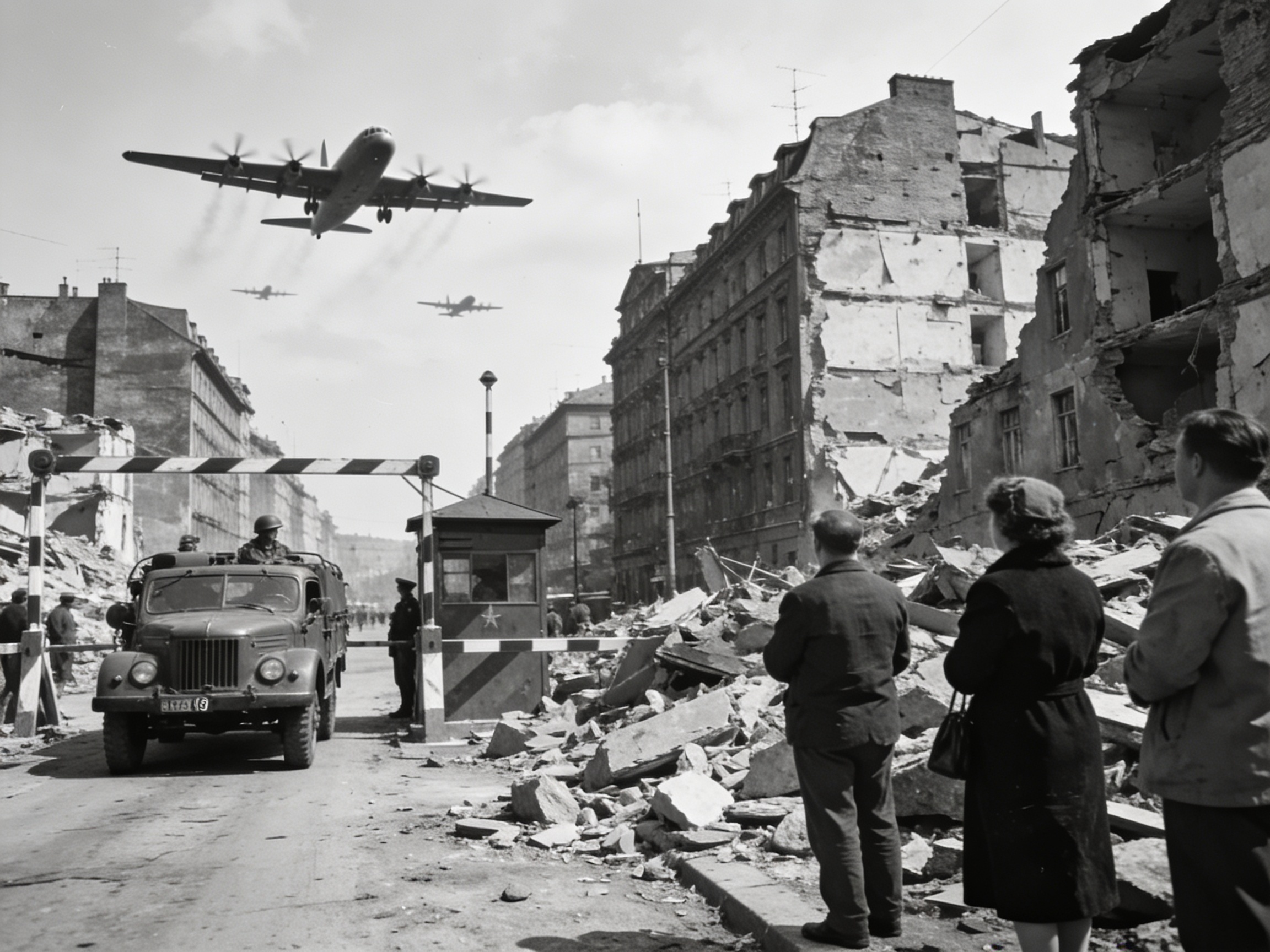
Stalin cut off all land routes to West Berlin, home to 2 million civilians. The Western response — the Berlin Airlift, flying in supplies for 11 months — made a formal Atlantic alliance politically inevitable.
Belgium, Netherlands, Luxembourg, France, and the UK signed a mutual defense treaty — the direct institutional predecessor to NATO. Originally aimed at Germany, it immediately pivoted toward the Soviet threat.
The Founding — April 4, 1949
Twelve nations signed a 14-article treaty in Washington that rewrote the rules of American foreign policy forever.
“To keep the Russians out, the Americans in, and the Germans down.”
Lord Ismay, NATO’s first Secretary GeneralThe Founding Nations
The Washington Treaty was a profound break with American tradition. The Founders’ warnings against “entangling alliances” had kept the United States out of European affairs for 150 years. NATO required America to permanently commit to European defense in peacetime — a revolutionary departure.
The Treaty’s Architecture: Key Articles
- Article 5 (Collective Defense): An armed attack against one or more members shall be considered an attack against all. Crucially, the actual response is left to each member’s judgment — there is no automatic obligation to go to war.
- Article 4 (Consultation): Members will consult whenever any of them believes its territorial integrity, political independence, or security is threatened.
- Article 6 (Geographic Scope): Defines the Euro-Atlantic areas where an attack triggers Article 5.
- Article 10 (Open Door): The alliance may invite any European state capable of furthering treaty principles to accede — the legal basis for all future enlargements.
NATO’s formation expressed Atlanticism — the conviction that the security of liberal democracies on both sides of the North Atlantic was indivisible. American and European democracies shared constitutional government, the rule of law, and market economies. Those values could only be defended in common.
The Cold War Years, 1949–1991
Forty years of nuclear deterrence, doctrinal revision, internal friction, and the ever-present specter of a war that never came.
Building the Military Machine
NATO in its first years was primarily a political symbol with no standing army or unified command. The Korean War (June 1950) dramatically accelerated militarization. By 1952, SHAPE (Supreme Headquarters Allied Powers Europe) was established near Paris, with General Eisenhower as the first SACEUR. Greece and Turkey joined NATO in 1952, extending the alliance to the Eastern Mediterranean.
West Germany: The Decisive Trigger
West Germany joined NATO on May 5, 1955. Within nine days, the USSR and its satellites formed the Warsaw Pact — the competing military bloc that would define European security for 35 years. For the Soviets, a rearmed Germany inside a Western military alliance was existentially threatening.
France Walks Out — 1966
President de Gaulle refused to subordinate French nuclear forces to American command. France withdrew from NATO’s integrated military command — the most dramatic unilateral act in alliance history. France remained a political member but operated its own force de frappe. It did not fully reintegrate into NATO’s military structure until 2009.
If the Soviet Union attacked — even with conventional forces — NATO would respond with nuclear weapons. Cheaper than matching Soviet conventional forces; psychologically powerful. But credibility eroded as Soviet nuclear capability grew.
Graduated, proportional responses — conventional force first, tactical nuclear if necessary, strategic exchange only as last resort. Generated fierce internal debate: Europeans feared the U.S. was planning to fight a nuclear war limited to the European continent.
Soviet intelligence misread NATO exercises as preparation for a real nuclear first strike. The world came closer to nuclear war than was publicly known. Misperception, not intent, nearly proved catastrophic.
“From Stettin in the Baltic to Trieste in the Adriatic, an iron curtain has descended across the Continent.”
Winston Churchill, Fulton Missouri, March 5, 1946Détente and the Helsinki Accords (1975)
The 1975 Helsinki Final Act, signed by 35 nations including all NATO and Warsaw Pact members, contained a groundbreaking human rights basket. Though non-binding, these provisions gave Eastern European dissidents legal tools to challenge their governments — seeds that contributed to the Soviet bloc’s eventual collapse.
Cold War Internal Tensions
- France vs. the U.S.: De Gaulle’s nationalism and pursuit of nuclear independence created the alliance’s first major rupture.
- Greece vs. Turkey: Two NATO members nearly went to war over Cyprus in 1974. Greece temporarily withdrew from NATO’s integrated military structure.
- Burden sharing: The U.S. consistently complained that European allies free-rode on American security guarantees.
- Nuclear consultation: European allies resented that nuclear decisions ultimately rested with Washington, regardless of shared risk.
Post–Cold War Identity Crisis
The Wall fell. The USSR collapsed. NATO won without firing a shot. But victory immediately raised an existential question: what was the alliance for now?
The “Promises” Debate
One of the most consequential historical disputes of the post-Cold War era concerns what Western leaders promised Soviet leaders about NATO expansion during negotiations over German reunification in 1990. Moscow’s “Broken Promises Narrative” holds that Secretary of State James Baker assured Gorbachev NATO would not move “not one inch to the east.”
Baker did use this phrase in a February 1990 conversation. However, archival research demonstrates that no formal, legally binding agreement on halting NATO expansion was ever concluded. Any assurances were verbal, unwritten, and predated the Soviet collapse — before the question of East European membership even arose.
Partnership for Peace (1994)
Rather than immediately expanding, NATO launched the Partnership for Peace program in 1994, offering bilateral cooperation to former Warsaw Pact states — including Russia. At its peak, PfP included 21 partner countries. Virtually every nation that later joined NATO went through PfP first.
Bosnia: The Delayed Reckoning
The catastrophic failure came in July 1995 at Srebrenica — a UN “safe area” where approximately 8,000 Bosniak Muslim men and boys were systematically massacred despite UN peacekeepers being present. NATO did not intervene. Only after Srebrenica did the West agree to decisive action. Operation Deliberate Force (August–September 1995) broke Bosnian Serb military positions and brought them to the Dayton Agreement.
Kosovo 1999: Acting Without the UN
On March 24, 1999, NATO launched Operation Allied Force — a 78-day air campaign against Yugoslavia — without UN Security Council authorization. NATO justified the action on humanitarian grounds: civilian protection superseded absolute state sovereignty when a government was massacring its own people. This legal argument has never been fully resolved and remains one of the most contested precedents in international law.
July 1995. A UN-designated safe area. Eight thousand human beings — men and boys — systematically executed while the world watched and NATO did not act. The failure stemmed from friction between UN and NATO commands, lack of political will among key allies, and ambiguous authorization. Srebrenica became both an indictment of inaction and the justification for every subsequent NATO humanitarian intervention.
September 11, Afghanistan & the War on Terror
The only Article 5 invocation in NATO’s history — triggered not by Soviet tanks, but by box cutters and hijacked aircraft.
The day after Al Qaeda’s attacks, NATO invoked Article 5 for the first and only time in its history. NATO deployed AWACS radar aircraft to patrol American skies — the first time NATO military assets operated on Article 5 grounds on American soil.
Afghanistan: NATO’s Longest War
In 2003, NATO assumed command of ISAF in Afghanistan — the alliance’s first major operation outside the Euro-Atlantic area. At its peak, ISAF comprised over 130,000 troops from 50 countries. NATO allies fought and died together in Helmand, Kandahar, and Kunar.
The mission ultimately ended in failure. The chaotic withdrawal of August 2021 resulted in the Taliban retaking Kabul within days of the final American departure. The collapse of Afghan security forces — which NATO spent two decades and billions of dollars training — was swift and total.
Lessons Not Learned
NATO’s own analysis concluded future missions need far greater attention to local political and cultural dynamics. A German parliamentary inquiry found “strategic failure.” The Atlantic Council’s verdict was blunt: NATO “fought in a strategically irrelevant place against the wrong enemy” and “fooled themselves and their publics about conditions on the ground.”
Afghanistan left deep questions about whether a collective defense organization should conduct nation-building and counterinsurgency missions at all.
The Expansion Debate
Ten rounds of enlargement over 77 years — from 12 to 32 members. The most consequential and contested strategic decision in post-Cold War history.
- Eastern European countries actively sought NATO membership — their choice was sovereign self-determination, not Western imposition
- NATO membership required democratic governance reforms, incentivizing political transformation across Central and Eastern Europe
- NATO-member Baltic states have not been attacked; non-members Ukraine and Georgia have been
- Post-Soviet security vacuum risked nationalist conflicts without a membership framework
- Putin’s attempt to prevent expansion via the Ukraine invasion achieved the precise opposite: Finland and Sweden reversed 70+ years of neutrality
- Eastward expansion toward Ukraine provoked Russian insecurity and contributed to the 2022 invasion at enormous humanitarian cost
- While no formal treaty prohibited expansion, the spirit of late-Cold War diplomacy suggested restraint was implied
- Each enlargement round added members with limited military capacity, potentially diluting Article 5 credibility
- A larger NATO required a broader definition of threats and interests, expanding the alliance far from its original purpose
- NATO’s Bucharest 2008 declaration of eventual membership for Ukraine and Georgia offered aspiration without security guarantees — the worst of both worlds
Russia’s full-scale invasion of Ukraine triggered the most dramatic voluntary expansion in NATO’s history. Both Finland and Sweden — with decades of military non-alignment — applied on May 18, 2022. Finland joined on April 4, 2023; Sweden on March 7, 2024. The Nordic bloc is now entirely inside NATO, extending the alliance’s border with Russia by over 1,340 kilometers. Putin’s stated goal of preventing NATO expansion produced the precise opposite result.
How NATO Actually Works
A dual political-military architecture operating by consensus — simultaneously its greatest democratic strength and most significant structural constraint.
Political Architecture
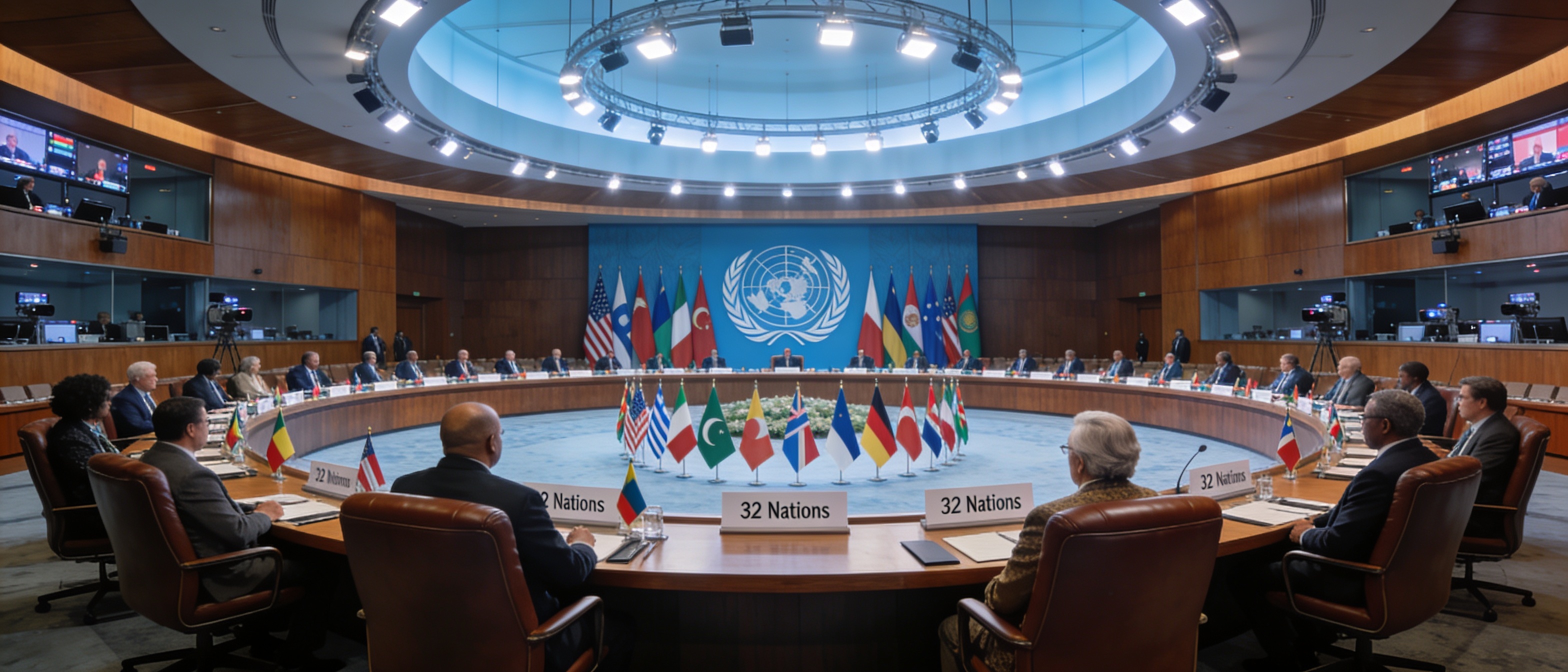
- North Atlantic Council (NAC): NATO’s principal decision-making body. All 32 member ambassadors meet regularly. Decisions require consensus — every member has a veto.
- Secretary General: Currently Mark Rutte (former Dutch Prime Minister, took office October 1, 2024). Chairs the NAC, serves as principal spokesperson, but has no military command authority.
- Nuclear Planning Group (NPG): Forum where allies (except France) consult on nuclear policy.
The Consensus Principle
NATO’s consensus requirement preserves sovereignty — no member is dragged into action it opposes. But it also means a single member can hold the entire alliance hostage. Turkey blocked Finland’s and Sweden’s applications for nearly two years. Hungary delayed consensus on Ukraine support. This vulnerability grows as the alliance expands.
Military Architecture
- NATO Military Committee: Highest military authority, composed of chiefs of defense from all 32 members.
- SACEUR: Always an American four-star general, commands Allied Command Operations from SHAPE in Mons, Belgium.
- Allied Command Transformation (ACT): Based in Norfolk, Virginia; responsible for military doctrine, training, and future capabilities.
- Standing Naval Forces: Permanent multinational naval groups deployable on short notice.
NATO’s Nuclear Architecture
Approximately 125 American nuclear bombs are stored in five European countries. The legal and moral questions have never been fully resolved.
Nuclear Sharing — How It Works
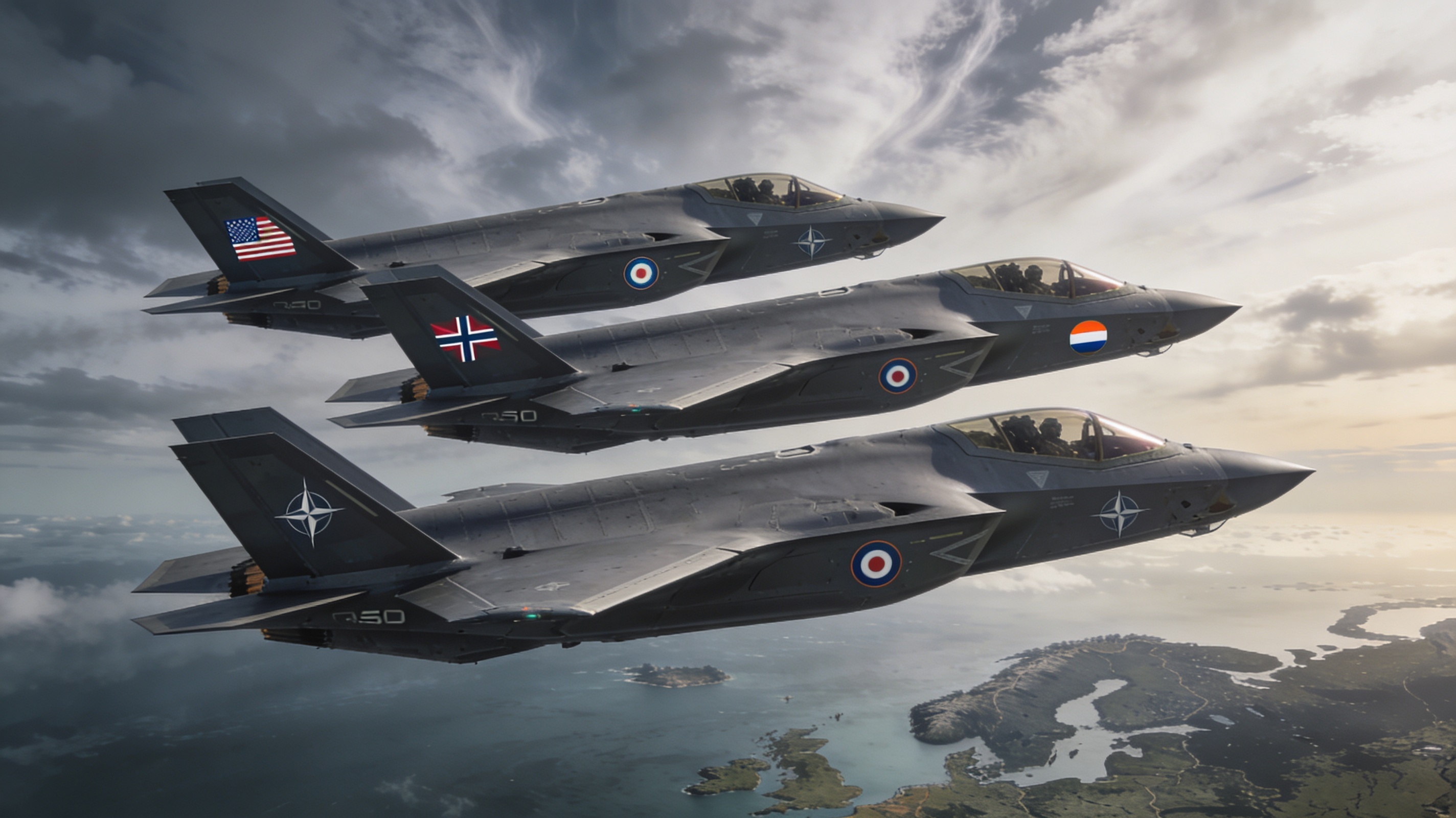
NATO’s nuclear posture rests on “nuclear sharing” — a Cold War arrangement in which American B61 nuclear gravity bombs are stored in five European NATO countries and designated for delivery by those countries’ own aircraft in wartime. As of 2025, an estimated 125–130 B61 nuclear bombs are deployed across Belgium, Germany, Italy, Netherlands, and Turkey.
The five nations are transitioning their delivery aircraft to the F-35A stealth fighter. The B61 bombs are being replaced with the B61-12 — a guided, variable-yield weapon that critics argue lowers the threshold for nuclear use by being more “usable” than older designs.
The Legality Problem
Nuclear sharing exists in legally ambiguous territory. Critics argue it violates the Nuclear Non-Proliferation Treaty (NPT): Article I prohibits nuclear weapon states from transferring weapons “to any recipient whatsoever”; Article II prohibits non-nuclear states from receiving them. NATO and the U.S. maintain the arrangement predates the NPT and is consistent with it since control remains American in peacetime.
| Country | Base | Est. Weapons | Aircraft | Status |
|---|---|---|---|---|
| 🇧🇪 Belgium | Kleine Brogel (Limburg) | ~10–15 | F-35A | Active |
| 🇩🇪 Germany | Büchel Air Base | ~15–20 | Tornado / F-35A | Active |
| 🇮🇹 Italy | Aviano / Ghedi | ~35–40 | F-35A | Active |
| 🇳🇱 Netherlands | Volkel Air Base | ~10–15 | F-35A | Upgraded 2024 |
| 🇹🇷 Turkey | Íncirlik Air Base | ~50 | F-16 | Contested |
Key Operations & Libya Case Study
From Cold War deterrence to Balkan peacekeeping to the “War on Terror” — and the Libya intervention that became the defining example of humanitarian overreach.
| Operation | Period | Location | Outcome | Assessment |
|---|---|---|---|---|
| Cold War Deterrence | 1949–1991 | Europe | No Soviet ground attack | Success |
| IFOR / SFOR (Bosnia) | 1995–2004 | Bosnia-Herzegovina | Dayton Agreement enforced | Success |
| Operation Allied Force | Mar–Jun 1999 | Kosovo / Serbia | Ethnic cleansing halted; no UN mandate | Controversial |
| KFOR | 1999–ongoing | Kosovo | Ongoing peacekeeping | Active |
| Operation Eagle Assist | Oct 2001–May 2002 | U.S. airspace | First-ever Article 5 operation | Success |
| ISAF (Afghanistan) | 2003–2014 | Afghanistan | Taliban returned 2021 | Strategic Failure |
| Operation Unified Protector | 2011 | Libya | Gaddafi overthrown; state collapse | Deeply Contested |
| Enhanced Forward Presence | 2017–ongoing | Baltics / Poland | Deterrence vs. Russia | Active |
| NATO Support to Ukraine | 2022–ongoing | Ukraine / NATO territory | Largest post-Cold War mobilization | Ongoing |
Libya: Humanitarian Intervention or Regime Change?
In March 2011, the UN Security Council passed Resolution 1973 authorizing a no-fly zone and “all necessary measures” to protect Libyan civilians. NATO took command. Over seven months, alliance aircraft destroyed Gaddafi’s military. He was captured and killed in October 2011.
Why It Became Scandalous
- Mission creep: Russia and China accused NATO of exceeding the UN mandate. The resolution authorized civilian protection — not regime change. NATO used it to achieve regime change.
- Post-war collapse: Libya became a failed state, a human trafficking hub, and a safe haven for jihadist groups — the conditions NATO claimed to be preventing.
- Civilian deaths: Human rights organizations documented civilian deaths from NATO bombing that the alliance refused to investigate.
- Covert forces: Britain and France deployed special forces on the ground despite the resolution prohibiting occupation forces.
- Arms embargo violation: NATO allowed Qatar and Gulf states to ship weapons to rebels despite a UN arms embargo.
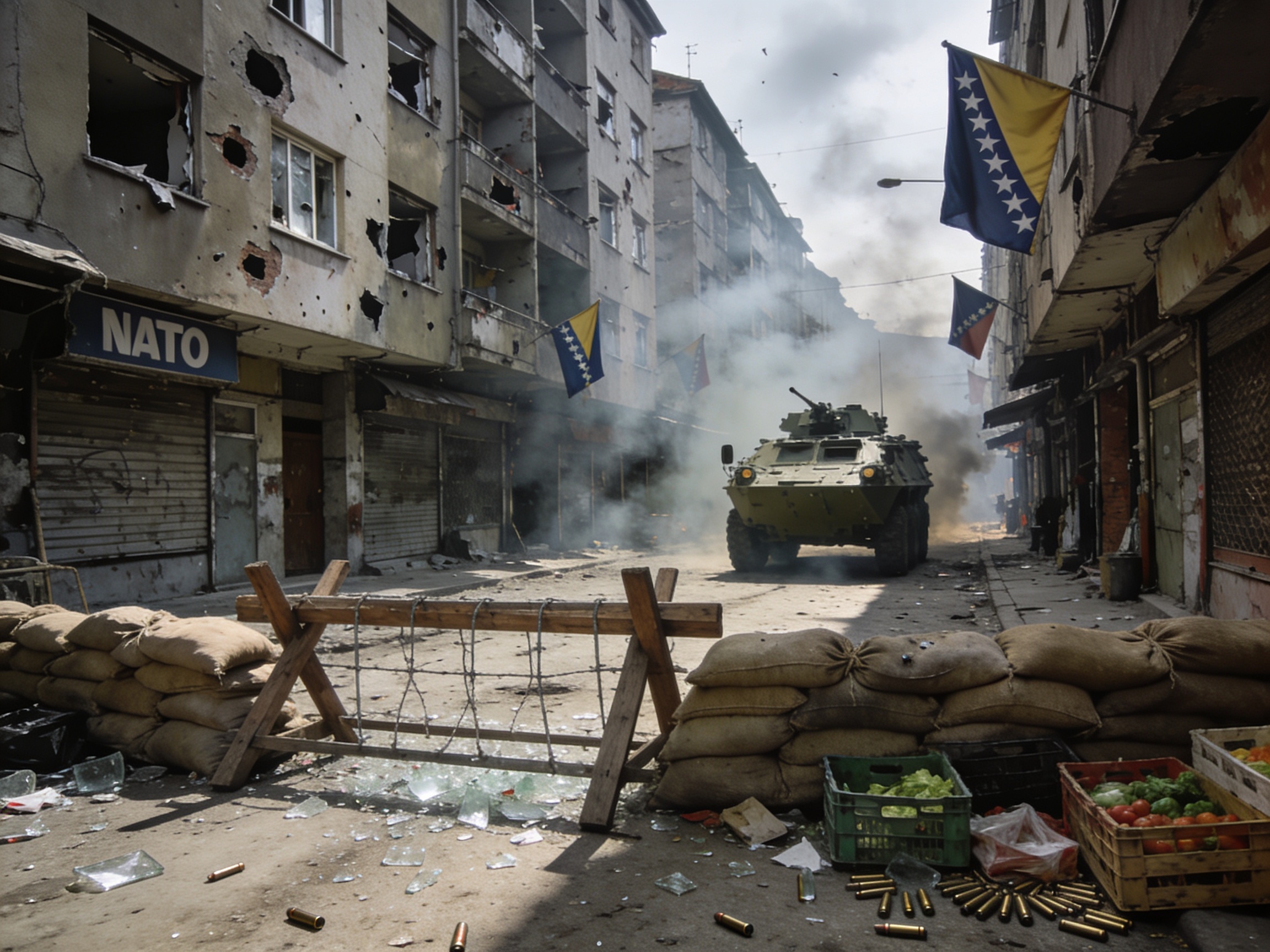
The Libya intervention permanently damaged the Responsibility to Protect (R2P) doctrine. Russia and China — burned by seeing their abstention used to authorize regime change — have since blocked any comparable UN resolution on Syria, Yemen, or Myanmar. NATO’s overreach in Libya may have cost hundreds of thousands of lives elsewhere by making Security Council consensus on humanitarian intervention functionally impossible.
The Burden-Sharing Crisis
The 2% GDP target, the Trump factor, and the growing question of whether Europe can defend itself without the United States.
The 2% Standard and Its Discontents
NATO’s 2% of GDP defense spending target was only formally agreed at the 2014 Wales Summit — directly in response to Russia’s annexation of Crimea. For years, most European allies systematically failed to meet it. By 2024, 23 of 32 member states were meeting the target — the first year European allies’ aggregate spending surpassed 2% of collective GDP. Critics note the metric is partly arbitrary: it does not measure capability quality, spending efficiency, or threat alignment.
The Trump Factor
No U.S. president has challenged NATO’s foundations as directly as Donald Trump. During his first term, Trump described NATO as “obsolete,” suggested the U.S. might not honor Article 5 for members not meeting spending targets, and demanded a cost-sharing revision that ultimately reduced the U.S. share from 22% to 16%. Congress responded in 2023 by passing legislation requiring two-thirds Senate approval for any presidential withdrawal from NATO — reflecting bipartisan recognition that the alliance’s value transcended any single administration.
Paradoxically, Trump’s pressure produced results: NATO Europe increased defense spending by 11% in real terms in 2024. In his second term (from January 2025), Trump has reportedly demanded 5% of GDP.
NATO & Russia — From Partnership to Confrontation
A relationship that moved from post-Cold War cooperation to existential confrontation — passing through broken promises, proxy conflicts, and ultimately, the largest land war in Europe since 1945.
“Russia’s war of aggression against Ukraine has shattered peace in Europe and has fundamentally changed our security environment.”
NATO 2022 Madrid Strategic ConceptNew Threats & the 2022 Strategic Concept
For the first time, NATO explicitly named China as a strategic challenge and declared cyberspace and space as operational domains of war.
Cyberspace as a War Domain
NATO formally recognized cyberspace as a domain of operations at the 2016 Warsaw Summit. The 2021 Brussels Communiqué extended Article 5 scope to include significant cyber attacks — meaning a major state-sponsored cyber attack could theoretically trigger collective defense. The NATO Cooperative Cyber Defence Centre of Excellence (CCDCOE) in Tallinn, Estonia is the alliance’s doctrine hub.
China: Named for the First Time
The 2022 Strategic Concept explicitly names China as a power whose “stated ambitions and coercive policies challenge our interests, security and values.” This represented a profound geographic expansion of NATO’s threat perception — from the Euro-Atlantic theater to the Indo-Pacific. Not all allies agree: European members with deep economic ties to China resist the push for a hard anti-China posture.
Hybrid Warfare
Disinformation campaigns, election interference, assassination operations, and “little green men” tactics — tools of gray-zone aggression below the threshold of conventional war — are now explicitly addressed in NATO doctrine.
Space as an Operational Domain
NATO declared space an operational domain in 2019. Attacks on satellites may constitute an Article 5 trigger. Russia’s attack on the Viasat satellite network in the opening hours of the Ukraine invasion — which disrupted communications across Europe — made this no longer theoretical.
Climate as a Threat Multiplier
NATO’s 2022 Strategic Concept recognizes climate change as a “threat multiplier” creating instability through resource competition, mass migration, and infrastructure vulnerability. Arctic melting has opened new strategic competition in the High North directly relevant to Norway, Finland, and Canada.
NATO’s Critics — All Angles
Honest assessment requires confronting the full spectrum of criticism — from academic realists to the Global South to voices within the alliance itself.
The Realist & Left Critique
Critics from the political left and realist international relations tradition — including scholars like John Mearsheimer and figures like George Kennan — argue that NATO is an instrument of American hegemony dressed in multilateral clothing. They contend that eastward expansion provoked Russia into increasingly aggressive responses; that the alliance bypasses international law when UN authorization is inconvenient (Kosovo 1999, Libya 2011); and that it sustains massive defense budgets that primarily benefit arms manufacturers while diverting resources from social needs.
The Global South Perspective
Many countries in the Global South view NATO with deep suspicion — as a re-grouping of former colonial powers enforcing a Western-dominated world order. The widespread Global South abstentions at UN votes condemning Russia’s invasion reflect not necessarily pro-Russian sentiment, but a generalized distrust of NATO’s humanitarian framing — given the legacies of Iraq, Libya, and other contested Western interventions.
Small State Concerns — From Inside
Within NATO itself, smaller states sometimes complain that U.S. dominance makes genuine consensus illusory, that Article 5’s ambiguity means commitment to small members is not iron-clad, and that nuclear sharing creates legal and political risks for host states without giving them actual control. Major powers set the agenda while small states bear disproportionate risks.
George Kennan — the architect of Cold War containment — wrote in 1997 that NATO expansion was “a tragic mistake” that would “inflame nationalistic, anti-Western and militaristic tendencies in Russian opinion” and “restore the atmosphere of the Cold War.” He warned it was “the beginning of a new Cold War.” Kennan died in 2005, before the 2022 invasion. Whether he was right — or whether his framework ignores the sovereign right of Eastern European nations to choose their own alliances — remains one of international relations’ defining debates.
What NATO Got Right
The credit side of the ledger — which, despite all controversies, remains substantial.
NATO Today & The Road Ahead
April 2026. Simultaneously the most united and most stressed the alliance has been since the Cold War — facing Russia on its eastern border, China’s rise, and persistent American ambivalence.
32 members including the newly united Nordic bloc. 23 of 32 members meeting the 2% GDP spending target. Enhanced Forward Presence with battle groups in all Baltic states and Poland. Highest defense spending in decades — 11% real-terms increase in 2024. Deep political unity on Ukraine support.
Trump administration’s continued questioning of burden-sharing and implicit Article 5 threats. Transatlantic trust at a historic low. Ukraine’s NATO path remains unresolved. Risk of unintended escalation with Russia along the expanded border. Europe’s debate about building genuine defense capacity independent of U.S. guarantees.
The Ukraine Question — NATO’s Central Dilemma
NATO’s official position — that “Ukraine’s future is in NATO” — remains unimplemented. The core dilemma is binary: not bringing Ukraine in arguably invites further Russian aggression; bringing Ukraine in while the war continues would automatically invoke Article 5 against Russia, risking a direct NATO-Russia war. Western governments have so far chosen the ambiguous middle ground — massive arms transfers and economic support, but no Article 5 guarantee.
European Strategic Autonomy
Trump’s return has turbocharged European debate about strategic autonomy — the capacity to defend Europe without depending on American military power. The EU has created new defense financing mechanisms including the €150 billion SAFE facility. But European defense autonomy would require replicating capabilities — intelligence, logistics, strategic airlift, nuclear deterrence — that would take decades to build. In the short to medium term, there is no viable alternative to NATO and the American nuclear umbrella.
| Core Task | What It Means | Key Actions |
|---|---|---|
| Deterrence & Defence | Reinvigorated core mission: conventional and nuclear deterrence against Russia | Enhanced Forward Presence; 300,000 high-readiness forces; new Baltic defence plans |
| Crisis Prevention & Management | Limited capacity for out-of-area operations when vital interests are at stake | Post-Afghanistan reassessment; partners in Middle East & Africa |
| Cooperative Security | Arms control, export controls, partnerships with non-NATO democracies globally | Indo-Pacific partners (Australia, Japan, South Korea, New Zealand) at summits |
“The load-bearing wall of the Western-led international order remains the Atlantic connection between North America and Europe. Whether it holds, evolves, or fractures will define the next chapter of history.”
SiaTechHub Analysis · April 2026