What’s Inside
The World Before the EU
Two continental wars in 30 years. 70 million dead. A continent that had invented democracy also invented industrial-scale genocide. Integration was not idealism — it was survival arithmetic.
Europe’s Catastrophic Century
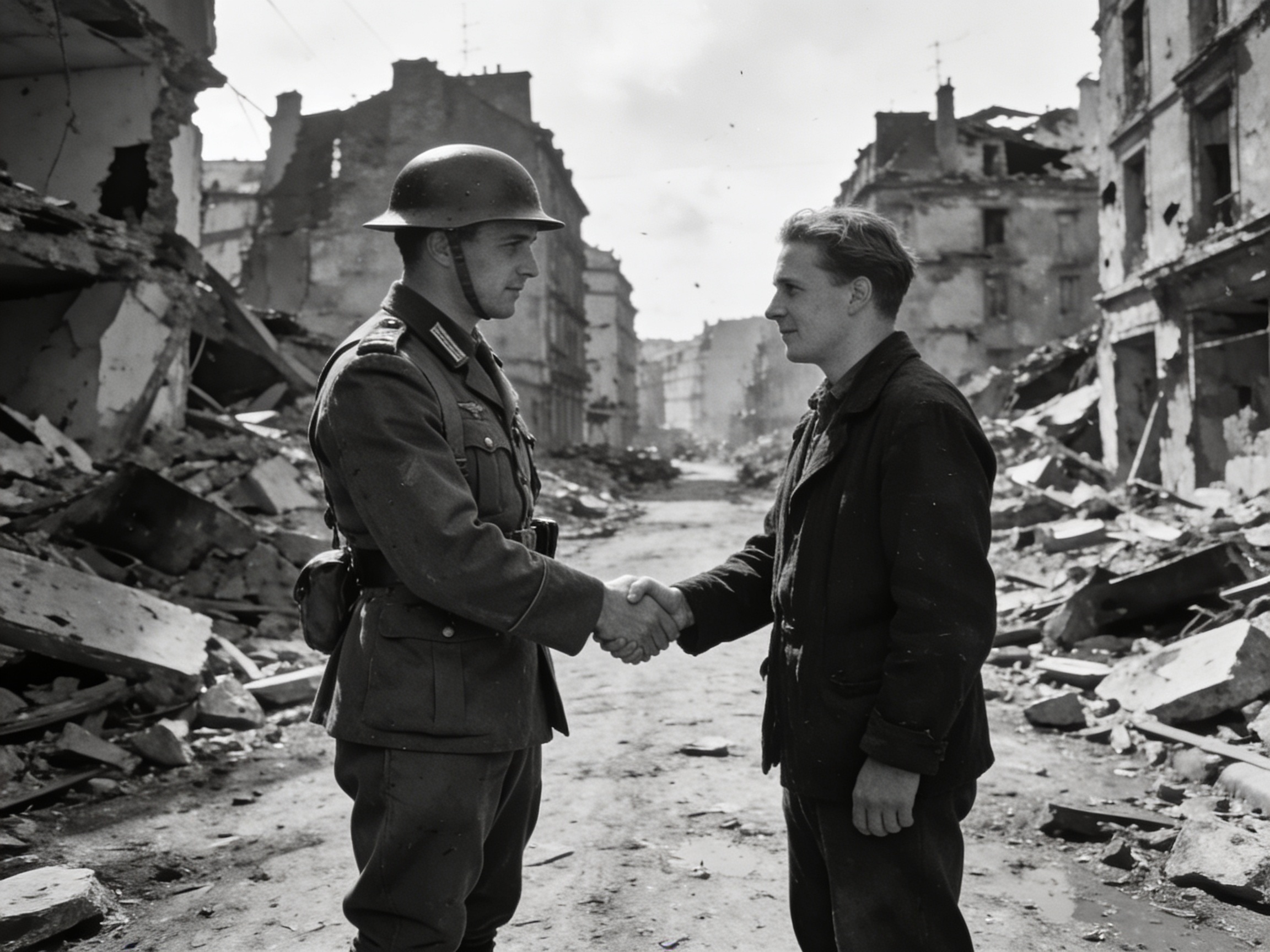
The European project was born from catastrophe. By 1945, the continent that had spent centuries claiming cultural and civilizational superiority lay in physical and moral ruins. World War I killed approximately 20 million people. World War II killed approximately 70–85 million, including 6 million Jews murdered in the Holocaust. Three generations of Europeans had now lived through industrialized slaughter.
The strategic analysis of European statesmen in 1945 was unsentimental: the source of both wars was the same — France and Germany. The two largest continental powers had gone to war in 1870, 1914, and 1939. Whatever the post-war settlement, it had to make another Franco-German war structurally impossible.
The Functional Logic
The genius of the integration project was not to demand that old enemies become friends overnight — but to make war economically irrational by entangling their economies. Jean Monnet’s core insight: begin with coal and steel, the raw materials of war. If France and Germany pooled their coal and steel production under a common authority, neither could rearm against the other without dismantling its own economy first.
This “functionalist” logic — economic integration first, political integration to follow — remains the operating theory behind all EU expansion of competences to this day.
The League of Nations (1920–1946) offered a preview of what multilateral institutions without enforcement mechanisms look like. The U.S. never joined. The USSR joined late and was expelled. Germany, Japan, and Italy left when inconvenient. The lesson: institutions need credible commitments and real shared interests, not just aspirations.
On September 19, 1946, Churchill delivered his Zurich speech calling for “a kind of United States of Europe.” Crucially, he imagined this as a Franco-German-led project — and did not envision the United Kingdom as a member. Britain, he said, would be a “friend and sponsor” but not a participant.
The Schuman Declaration — May 9, 1950
Six paragraphs delivered in a Paris drawing room that launched the most consequential act of political architecture in modern European history.
“Europe will not be made all at once, or according to a single plan. It will be built through concrete achievements which first create a de facto solidarity.”
Robert Schuman, May 9, 1950 — now celebrated as Europe DayJean Monnet — The Architect Behind the Curtain
The declaration was delivered by French Foreign Minister Robert Schuman, but the intellectual architecture came entirely from Jean Monnet — a cognac businessman turned supranational visionary who understood power, economic interdependence, and the pathologies of nationalism better than most heads of state. Monnet sent Schuman a long note on May 1, 1950, urging “broad, real, immediate and dramatic action that changes things.”
Monnet became the first President of the ECSC’s High Authority (the forerunner of the European Commission) from 1952 to 1955. He spent his later years as a tireless lobbyist for further integration through his privately-funded Action Committee for the United States of Europe.
The Founding Six
The Treaty of Paris establishing the European Coal and Steel Community was signed on April 18, 1951 by six nations: France, West Germany, Italy, Belgium, Netherlands, and Luxembourg. It entered into force on July 23, 1952. The UK was invited and declined — the first act in a 70-year drama about Britain’s ambivalence toward European integration.
Other Founding Fathers
Alongside Monnet and Schuman, the EU’s intellectual genealogy includes:
- Konrad Adenauer (West Germany): Rehabilitated Germany into European partnership, prioritizing western integration over eastern reunification
- Alcide De Gasperi (Italy): Led Italy’s postwar Christian Democratic government; co-founder of the European idea with Catholic federalist roots
- Paul-Henri Spaak (Belgium): Belgian statesman who chaired the committee that produced the 1956 “Spaak Report” that became the blueprint for the Treaty of Rome
- Altiero Spinelli (Italy): Anti-fascist federalist who wrote the Ventotene Manifesto calling for a European federation while imprisoned by Mussolini
The date of Schuman’s declaration is now celebrated annually as Europe Day across all EU member states — the EU’s equivalent of a founding national holiday.
The Treaty Architecture
Eight major treaties over 72 years — each one expanding competences, reforming institutions, or rescuing the project from crisis. The EU is built in layers, each one responding to the failures of the last.
How the EU Actually Works
Seven institutions, no single capital, no president with executive power, and a legislative process that involves three bodies simultaneously. Understanding EU governance requires abandoning national constitutional templates entirely.
The EU’s deepest structural problem: the European Parliament is elected but has limited powers; the Council has power but meets in secret; and the Commission holds the legislative monopoly but is not directly elected. Citizens cannot vote for the body that writes EU law. Power is dispersed across three institutions in a system designed to prevent any single actor from dominating — but this fragmentation makes democratic accountability structurally difficult. Voter turnout in European Parliament elections reached a 25-year high of 51% in 2024, suggesting growing engagement — but 49% of EU citizens still did not vote.
The Single Market
The EU’s greatest economic achievement: a marketplace of 450 million people where goods, services, capital, and people move as freely as within a single country — and the most powerful trade negotiating bloc on earth.
The Four Freedoms
The single market rests on four fundamental freedoms that are legally enforceable rights of EU citizens and businesses:
- Free movement of goods: No customs duties or quantitative restrictions on trade between member states. Common external tariff for goods from outside the EU.
- Free movement of services: Any EU-established company can provide services anywhere in the EU. Still the most incomplete freedom — services account for 70% of EU GDP but only 20% of intra-EU trade.
- Free movement of capital: No restrictions on investment or financial transfers across borders. Generated fierce controversy during the Eurozone crisis when capital flight from peripheral states accelerated instability.
- Free movement of persons: Any EU citizen can live, work, study, and retire in any member state. The freedom that generated the most political backlash — including contributing to Brexit.
Harmonization vs. Mutual Recognition
The single market operates through two mechanisms. Harmonization means EU-wide rules replace national rules — used for product safety, financial regulation, and environmental standards. Mutual recognition means if a product is legal in one state, it must generally be accepted in all others — established by the Court of Justice in the landmark Cassis de Dijon case (1979), which found that a French liqueur could not be excluded from German shelves because Germany preferred stronger liqueurs.
GDPR & the Regulatory Superpower
The “Brussels Effect” describes how EU regulation sets de facto global standards — because multinationals operating in the EU’s 450-million-person market find it cheaper to apply EU rules globally than to maintain separate compliance systems. GDPR (2018) transformed global data privacy law. The Digital Markets Act (2022) is restructuring how Apple, Google, and Meta operate worldwide.
A landmark Commission study estimated that completing the single market would add 4.5–7% to EU GDP over a decade through economies of scale, increased competition, and elimination of border costs. The real economic gains proved more modest — but real and sustained.
Signed in 1985 by five countries (France, Germany, Belgium, Netherlands, Luxembourg), Schengen abolished internal border checks. Now covers 29 countries and 420 million people. Four EU members — Ireland, and formerly the UK — opted out. Non-EU members Iceland, Norway, Switzerland, and Liechtenstein participate. Schengen came under severe pressure during the 2015 migration crisis and COVID-19 pandemic, with multiple member states temporarily reimposing border checks.
The Bolkestein Services Directive (2006) — which would have radically liberalized the cross-border provision of services — was gutted by Parliament under intense pressure from French and German unions, who feared a “Polish plumber” undercutting domestic wages. The services market remains the EU’s greatest unrealized economic potential.
The Euro — One Currency, Twenty Economies
The most ambitious monetary experiment in history — a single currency without a single state. Its design flaws were known at birth and nearly destroyed it.
From Maastricht to Notes in Your Pocket
The euro’s conceptual origins lie in the Werner Report (1970), which first proposed monetary union. The Maastricht Treaty (1992) created the legal framework, establishing the Maastricht criteria: member states wishing to adopt the euro must achieve inflation below 1.5% above the three best-performing states, deficit below 3% of GDP, debt below 60% of GDP, exchange rate stability for two years, and long-term interest rates within 2% of the best performers.
The euro was introduced as an accounting currency on January 1, 1999. Physical notes and coins entered circulation on January 1, 2002 in 12 countries. It is now used by 20 of 27 EU states — the eurozone.
The Structural Flaw
Nobel laureate economists including Milton Friedman and Paul Krugman warned at the time: the eurozone is not an Optimal Currency Area. Countries with vastly different economic structures, productivity levels, and fiscal cycles cannot share monetary policy without mechanisms to offset the losses. A single interest rate set for Germany’s export-oriented economy would be wrong for Spain’s construction boom — or Greece’s public sector. Without a common fiscal policy to transfer resources between states, asymmetric shocks would become crises.
This structural flaw, documented before the euro launched, nearly destroyed it between 2010 and 2012.
Denmark: Held a referendum in 2000; 53% voted No. Maintains an opt-out from Maastricht.
Sweden: Technically required to join but avoids meeting Maastricht criteria as deliberate policy. Held a referendum in 2003; 56% voted No.
UK: Had a Maastricht opt-out and never came close to joining.
Poland, Czech Republic, Hungary: Not yet meeting criteria or politically opposed.
ECB President Mario Draghi’s pledge to do “whatever it takes to preserve the euro. And believe me, it will be enough” ended the sovereign debt crisis virtually overnight. No money was spent — the pledge alone was sufficient. The episode demonstrated both the euro’s fragility and the power of credible central bank commitment.
The Enlargement Waves
From 6 founding members to 27. One nation has left. Two have rejected entry. At least nine are currently in the accession pipeline.
To join the EU, a candidate state must meet three conditions: political (stable democracy, rule of law, human rights, protection of minorities); economic (functioning market economy capable of withstanding competitive pressure within the EU); institutional (ability to take on and implement all EU law — the acquis communautaire, now comprising some 80,000–100,000 pages of legislation). Crucially, the EU itself must also have the “capacity to absorb” new members — an open-ended qualifier that has been used to slow or block enlargement.
Turkey applied for EEC membership in 1987 and was granted official candidate status in 1999. Accession negotiations opened in 2005. They have been effectively frozen since 2016 following the attempted coup and subsequent democratic backsliding under President Erdoğan. Turkey remains a NATO member but an EU candidate in name only — a 39-year candidate relationship that has produced neither membership nor a clean break.
The Eurozone Sovereign Debt Crisis
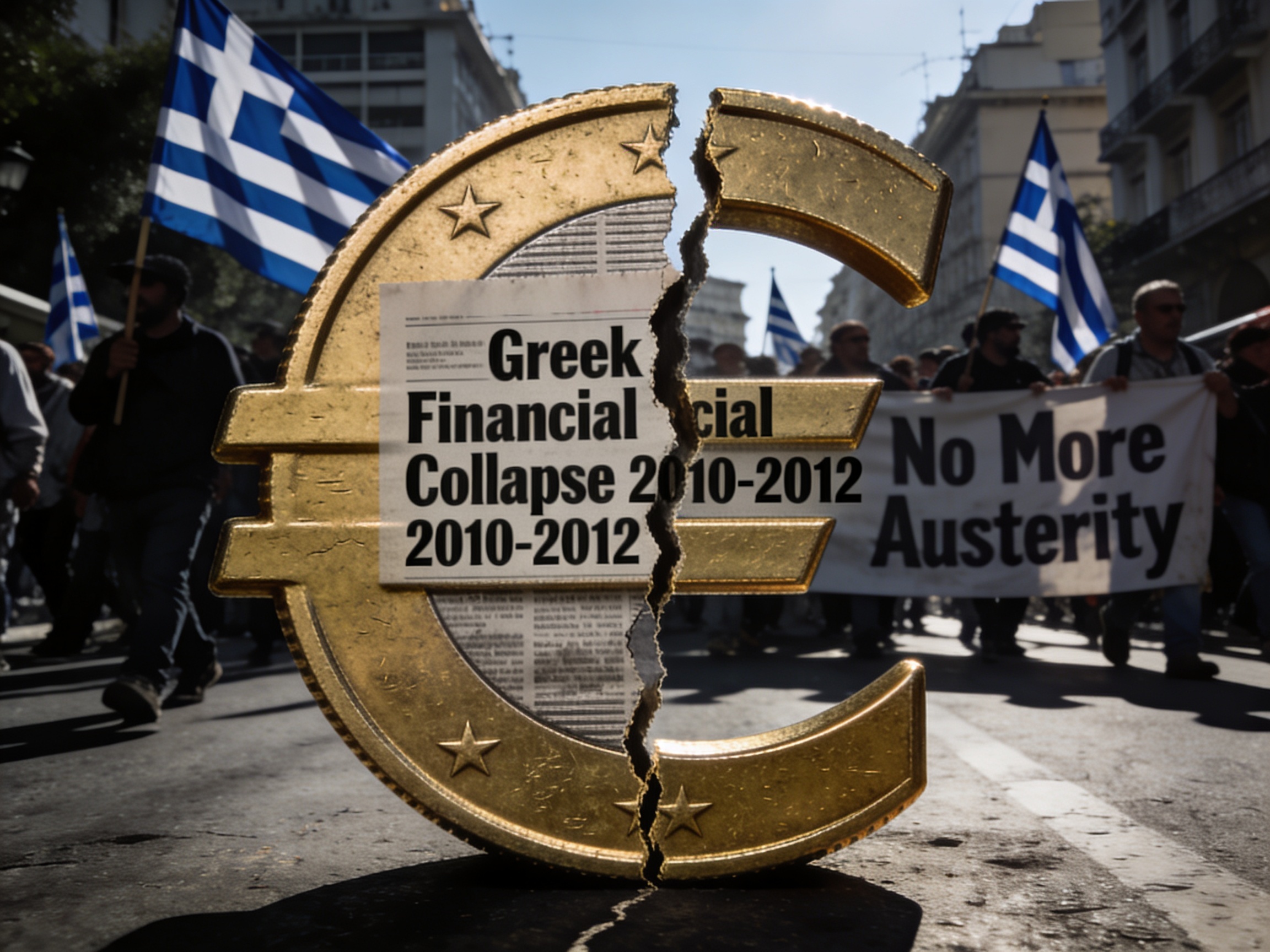
2009–2018. The structural flaw at the euro’s heart nearly destroyed it. Greece, Ireland, Portugal, Spain, and Cyprus needed bailouts. The crisis exposed that a monetary union without a fiscal union was an accident waiting to happen.
The Mechanism of Collapse
The 2008 global financial crisis exposed what low eurozone interest rates had enabled: massive debt accumulation in peripheral states. Greece’s newly elected PASOK government revealed in late 2009 that the previous government had been falsifying fiscal statistics — the real deficit was not 3.7% of GDP but closer to 12.7%. Bond markets panicked. Yields on Greek bonds spiked to unsustainable levels.
The structural trap was vicious: eurozone countries had surrendered monetary sovereignty but retained fiscal independence. They could not devalue their currency to regain competitiveness. They could not print money to service debt. They were caught in a vice: austerity to satisfy creditors caused GDP to contract, which increased the debt-to-GDP ratio even as nominal debt fell.
The Troika and the Austerity Experiment
The IMF, European Commission, and ECB — the “Troika” — managed three Greek bailouts (€110bn in 2010, €130bn in 2012, €86bn in 2015) in exchange for severe austerity conditions: pension cuts, wage reductions, mass public sector layoffs, VAT increases, privatizations. Greek GDP fell 25% from peak to trough — a depression comparable in scale to the U.S. Great Depression of the 1930s. Unemployment reached 27%; youth unemployment peaked above 60%.
GDP decline 2008–2016: –25%
Peak unemployment (2013): 27.5%
Youth unemployment peak: 60.1%
Total bailout packages: €288 billion
Pension cuts implemented: 12 rounds
July 2015 “No” referendum: 61.3% voted to reject the Troika terms — then the government accepted them anyway
The ECB’s Outright Monetary Transactions programme (2012) — pledging to buy unlimited sovereign bonds of countries under attack — ended the crisis phase without ever being activated. The credible commitment was enough. The programme’s legality was challenged before the German Constitutional Court and the CJEU — both ultimately upheld it, but not without placing limits on ECB discretion.
The crisis produced: the European Stability Mechanism (€500bn permanent bailout fund), the Banking Union (single supervisory mechanism), the Fiscal Compact (mandatory balanced budget requirements), and — most consequentially — a decade-long debate about whether the eurozone needs a common budget, common debt instruments (“Eurobonds”), and a European treasury.
“We will do whatever it takes to preserve the euro. And believe me, it will be enough.”
Mario Draghi, ECB President — London, July 26, 2012 — the speech that saved the euroBrexit — The First Exit
On June 23, 2016, 51.9% of UK voters chose to leave the EU. The first departure in the alliance’s history triggered four years of political chaos and permanently altered European geopolitics.
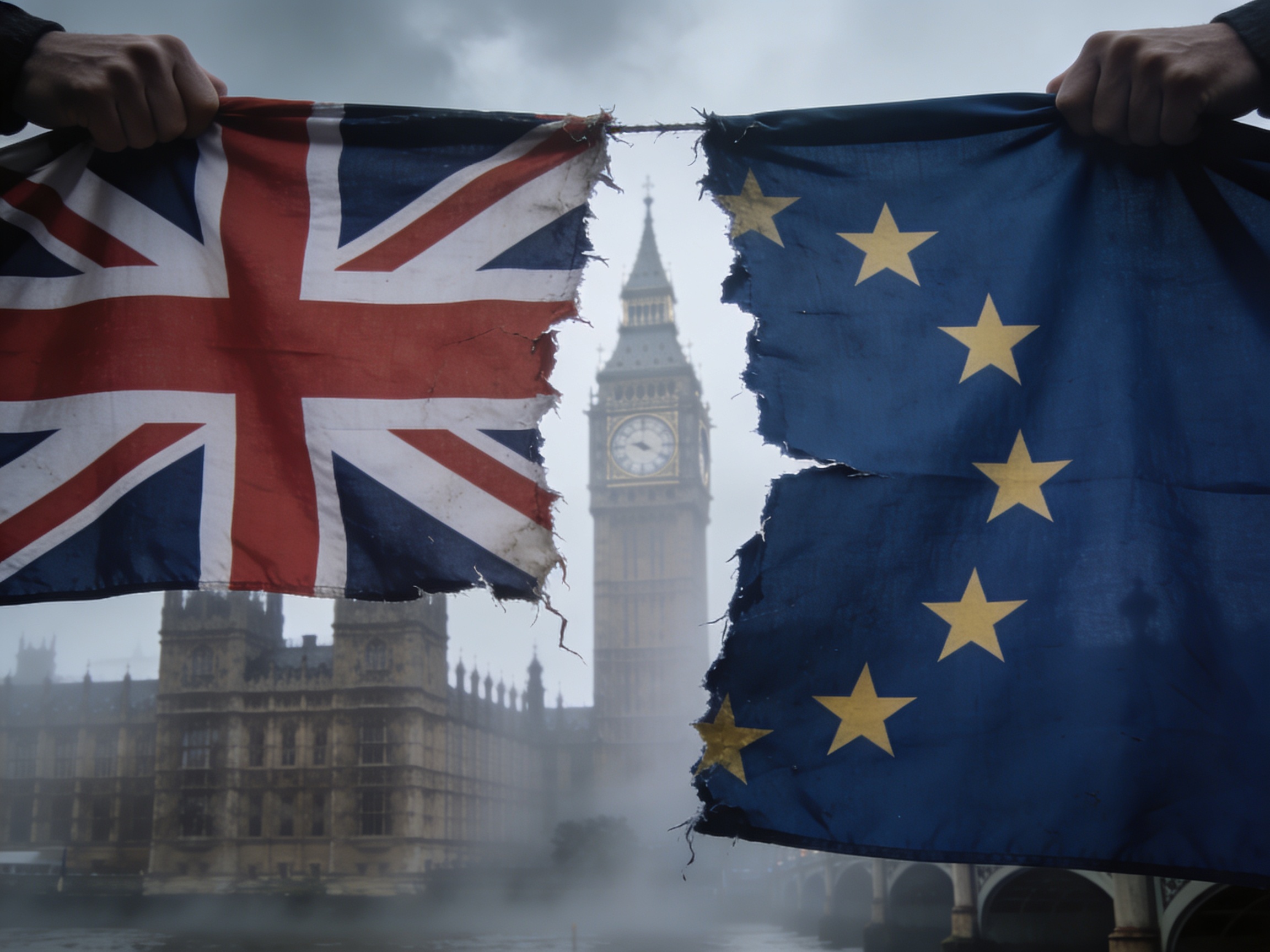
June 23, 2016: 51.9% vote Leave
March 29, 2017: UK triggers Article 50
Jan 31, 2020: UK formally leaves the EU
Dec 31, 2020: Transition period ends; single market/customs union exit
May 2023: Windsor Framework resolves Northern Ireland Protocol
The Deep Causes
Brexit was not primarily about EU policy. It was about Britain’s unresolved identity as a post-imperial nation, decades of Euro-skeptic media culture, regional deindustrialization, and legitimate grievances over immigration that the free movement framework made impossible to control unilaterally.
- Immigration: Net migration to the UK reached 330,000 in 2015. Under single market rules, the UK could not cap EU migration. The Leave campaign’s promise to “take back control of our borders” resonated powerfully with communities that had experienced rapid demographic change.
- Economic geography: Leave voters were concentrated in post-industrial regions of northern England and Wales that had not recovered from deindustrialization — regions that received EU structural funds but did not feel the benefits of single market integration.
- Sovereignty narrative: Decades of anti-EU media coverage framed every EU regulation as an alien imposition. The “350 million a week for the NHS” claim was knowingly false — but it captured a real political mood.
- The Remain campaign’s failure: The “Project Fear” economic warnings of immediate post-Brexit recession proved exaggerated in the short term, destroying their credibility at the critical moment.
The Consequences
Brexit has materially damaged UK trade with the EU — its largest partner. UK goods exports to the EU are estimated to be 15–20% lower than they would have been. Services, financial, and professional sectors face new barriers. The UK lost access to EU research programmes, Erasmus student exchange, and criminal justice cooperation tools. Scotland and Northern Ireland voted Remain; Brexit has reinvigorated Scottish independence sentiment and created the permanent “Northern Ireland Protocol” problem of a regulatory border within the UK.
For the EU, Brexit removed a large net contributor to the budget, a major military power, and the alliance’s most consistently free-market voice. The loss was significant — but Brexit also demonstrated, contrary to Eurosceptic predictions, that leaving is far more costly and complicated than staying.
The Migration Crisis, 2015–2016
Over one million people arrived in the EU in 2015 — the largest forced displacement in Europe since World War II. The EU’s response was fractured, inadequate, and politically scarring.
The Structural Failure
The EU’s migration architecture was built for normal times: the Dublin Regulation required asylum seekers to register in the first EU country they entered. In 2015, this meant Italy and Greece were legally responsible for processing over a million arrivals — an impossible burden that both countries simply stopped enforcing. Migrants moved freely north toward Germany, Sweden, and Austria, exposing Schengen’s vulnerability to mass arrival events.
The Commission proposed an emergency relocation scheme for 120,000 refugees from frontline states. The scheme was approved over the objections of Hungary, Slovakia, Romania, and the Czech Republic — but member states relocated only a small fraction of the agreed numbers. Only 272 of the 160,000 agreed relocations had been carried out within the first year.
The Fence Builders and the “Welcome Culture”
The crisis split Europe along geographic and political lines. Germany’s Chancellor Merkel issued her famous “Wir schaffen das” (we can do this), accepting 1 million asylum seekers in 2015. Hungary’s Orbán built razor-wire fences and declared protecting Hungary a Christian obligation. The clash between these visions — humanitarian solidarity versus national border control — fundamentally reshaped EU politics and empowered populist parties across the continent.
The EU-Turkey Deal (March 2016)
The EU paid Turkey €6 billion and offered visa liberalization in exchange for closing the Aegean migration route. Irregular crossings dropped dramatically — but critics called the deal a violation of the right to asylum and an outsourcing of EU values to an authoritarian government. Erdoğan has used migration as political leverage against the EU repeatedly since.
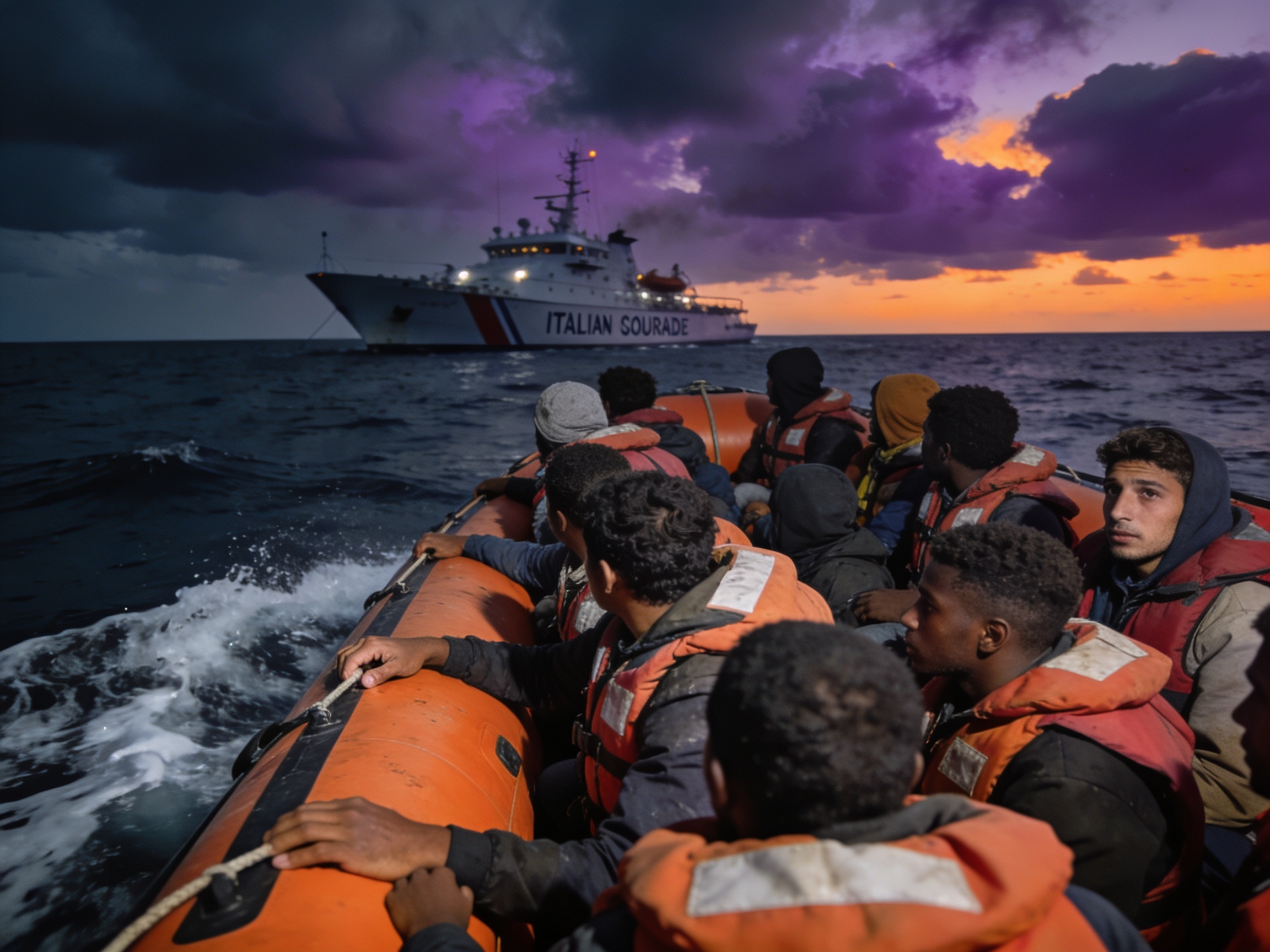
>1 million arrivals in EU, 2015
3,771 deaths in the Mediterranean, 2015
160,000 agreed relocation target
272 actually relocated within year 1
7 EU states temporarily reintroduced border controls
€6 billion paid to Turkey under 2016 deal
The Rule of Law Crisis
Can the EU expel or effectively discipline a member state that systematically dismantles its democracy from within? The Hungary case says: barely.
Hungary Under Orbán
Since Viktor Orbán’s Fidesz party won a two-thirds parliamentary supermajority in 2010, Hungary has systematically dismantled democratic checks. Courts packed with loyalists, independent media eliminated, academic freedom attacked (Central European University driven out), electoral law rewritten to entrench Fidesz, and anti-LGBTQ+ legislation passed in defiance of EU values. The European Parliament adopted a report in 2022 calling Hungary a “hybrid regime of electoral autocracy” — no longer a full democracy.
Article 7 — The Nuclear Option That Isn’t
Article 7 of the Treaty on European Union allows for suspension of a member state’s voting rights if it persistently violates EU values. The European Parliament triggered Article 7 against Hungary in 2018. But Article 7’s activation requires unanimity in the Council — and Poland (itself under Article 7 proceedings until the 2023 change of government) blocked the process. The “nuclear option” is functionally dead as long as two states cover each other.
The Conditionality Mechanism
In 2021, the EU introduced a new tool: the Rule of Law Conditionality Regulation, allowing the Commission to suspend EU funds to states where rule of law violations affect EU financial interests. Hungary had €30 billion in EU funds frozen by 2022. This proved more effective than Article 7 — financial pressure accomplished what political pressure could not. Partial funds were released in 2023 after Hungary made procedural concessions, but the core structural problems remain unresolved.
€30+ billion in EU funds remain suspended or conditional. European Parliament repeatedly calls for Hungary to be stripped of Council voting rights. Hungary uses its Council veto strategically — blocking Ukraine aid, EU foreign policy statements, and enlargement decisions as political leverage. The Commission has referred Hungary to the CJEU over multiple rule of law violations. The November 2025 European Parliament report described Hungary’s situation as having “continued to deteriorate.”
Poland’s Law & Justice (PiS) party pursued similar democratic backsliding between 2015–2023, packing courts and controlling public media. The EU’s response was slow and ineffective. What changed things: Polish voters. Donald Tusk’s opposition coalition won the October 2023 elections. Poland’s new government has committed to restoring judicial independence. EU funds have been progressively unfrozen — demonstrating that internal democratic processes can succeed where external EU pressure failed.
The Common Agricultural Policy
The EU’s oldest, most expensive, and most controversial policy. It has fed a continent, subsidized butter mountains, harmed developing world farmers, and survived 60 years of “reform.”
The Policy That Won’t Die
The CAP was created in 1962 to address postwar food insecurity. By the 1980s it had succeeded too well: intervention buying produced literal “butter mountains” and “wine lakes” — vast stockpiles of surplus production bought at guaranteed minimum prices. At its peak, the CAP consumed 70%+ of the entire EU budget. Today it still accounts for approximately 30% (€387 billion for 2021–2027).
Successive reforms have shifted subsidies from production-linked payments to direct income support with environmental conditions attached — but the fundamental architecture, and the political power of farming lobbies in France, Ireland, and Poland, has made radical reform impossible. In early 2024, mass farmers’ protests across Europe (tractors blocking Brussels, Paris, Berlin) forced the Commission to roll back several Green Deal environmental conditions on farming subsidies.
- Transformed post-war food scarcity into abundance — Europe became food self-sufficient
- Stabilized rural communities and preserved landscapes across the EU
- Provided income security for tens of millions of small farmers
- Introduced environmental standards through the “green” and “eco-scheme” pillars
- Guaranteed food safety standards for 450 million consumers
- 80% of payments go to the largest 20% of farms — massive transfers to agri-businesses, not small farmers
- Subsidized European food exports undercut farmers in developing countries, damaging Global South agriculture
- Environmental damage: intensive farming incentivized at the expense of biodiversity
- WTO challenges: EU agricultural subsidies distort global markets
- French and German political power means genuine reform is structurally blocked
Foreign Policy — An Economic Giant, a Political Dwarf
The famous Kissinger question: “Who do I call if I want to speak to Europe?” still has no satisfactory answer. The CFSP is the EU’s most significant structural limitation.
How the CFSP Works (and Doesn’t)
The Common Foreign and Security Policy was created by the Maastricht Treaty (1993) and significantly reformed by Lisbon (2009). It is led by the High Representative for Foreign Affairs and Security Policy (currently Kaja Kallas of Estonia), who also chairs the Foreign Affairs Council and leads the European External Action Service — the EU’s diplomatic corps with 140+ delegations worldwide.
The fundamental constraint: all significant CFSP decisions require unanimity. One member state can block any foreign policy statement. Hungary has repeatedly used this power — delaying or watering down EU statements on Russia, Ukraine aid packages, and sanctions. The absence of qualified majority voting in foreign policy remains the EU’s most significant structural weakness on the world stage.
Where the EU Has Influence
The EU is powerful where it can deploy economic tools. Sanctions against Russia post-2022 — 14 packages covering oil, financial systems, technology, and individuals — represent the largest peacetime sanctions regime in history. Trade agreements give the EU enormous leverage: the EU is the world’s largest trading bloc, and access to its market is one of the most powerful diplomatic tools any actor possesses.
The Iraq Test (2003)
The deepest failure of the CFSP came in 2003 when France and Germany refused to support the U.S. invasion of Iraq while UK, Spain, Poland, and the new EU accession countries backed Washington. The EU issued no common position. Donald Rumsfeld’s contemptuous “old Europe vs. new Europe” framing hit a real nerve — the EU had visibly fractured at the most consequential geopolitical moment since the Cold War.
The Common Security and Defence Policy has deployed 30+ civilian and military missions since 2003 — peacekeeping in Bosnia (EUFOR Althea), anti-piracy in the Indian Ocean (Operation Atalanta), training missions in Mali and Somalia. These are limited in size and mandate compared to NATO operations. The EU has no permanent military headquarters and no meaningful independent command-and-control capability for major operations.
The EU’s response to Russia’s full-scale invasion of Ukraine has been the most consequential use of its economic foreign policy tools. 14 sanctions packages. Seizure of €280+ billion in frozen Russian state assets. Ban on Russian energy imports (mostly achieved by 2023). These represent the EU acting as a credible geopolitical actor — when interests align and unanimity is achievable.
Critics & Controversies — All Angles
The EU is criticized simultaneously for too much power and too little. Understanding why requires separating the institutional critique from the ideological one.
The Left Critique — Neoliberal Straightjacket
The European left increasingly identifies the EU’s legal architecture as a structural barrier to progressive economic policy. Maastricht’s deficit and debt criteria, Stability and Growth Pact limits, state aid rules, and the ECB’s price stability mandate are all embedded in treaty law — and changing treaty law requires unanimity and often national referendums. Greek experience demonstrated that a democratic government could be forced to implement austerity policies that 61% of its voters had just rejected in a referendum. For the left, this is not integration — it is the constitutionalization of neoliberalism.
The Eurosceptic Right — Sovereignty and Identity
From Le Pen’s Rassemblement National to Orbán’s Fidesz to the UK’s UKIP, the right critique focuses on sovereignty and cultural identity. The EU is a project of elites, imposed on peoples without meaningful consent. Brussels bureaucrats make rules affecting daily life without democratic accountability. Free movement undermines national cohesion. The Court of Justice can strike down laws passed by elected national parliaments.
The Global South Critique — Fortress Europe
From the perspective of the developing world, the EU presents a sharp contradiction: it presents itself as a champion of human rights and development while maintaining agricultural subsidies that undercut African farmers, maintaining the world’s most sophisticated border enforcement system, and negotiating trade agreements that critics say lock developing nations into structural disadvantage. The “Fortress Europe” concept — rich, white, well-protected — is the EU’s uncomfortable global face.
The Technocratic Critique — Complexity as Power
Even committed pro-Europeans acknowledge the EU’s decision-making opacity. The Ordinary Legislative Procedure involves the Commission, Parliament, and Council in an elaborate dance of proposals, readings, and trilogues — informal three-way negotiations between institutions that take place in private and produce compromises that no single actor has publicly endorsed. This complexity serves institutional interests: it makes EU processes inaccessible to ordinary citizens and resistant to popular accountability.
The most honest answer is: the democratic deficit is structural, not accidental. An institution that serves 27 sovereign nations with different languages, cultures, and political traditions cannot replicate national democratic accountability at the European level — not because Europeans are uncommitted to democracy, but because there is no European demos (people). Without a shared political identity, there cannot be a fully democratic European political system. The Lisbon Treaty increased Parliament’s powers significantly — but the fundamental asymmetry between where power lies (the Council and Commission) and where democratic legitimacy lies (national parliaments and the European Parliament) cannot be engineered away.
What the EU Got Right
The credit side of the ledger — which, for all its contradictions, remains genuinely historic.
“If the European Union did not exist, we would have to invent it — because the alternative is that each of our nations goes alone into a world dominated by China, the United States, and tomorrow perhaps India or Brazil.”
Emmanuel Macron — Sorbonne Address, April 2018The EU Today & The Road Ahead
April 2026. A union simultaneously more ambitious and more fragile than at any point in its 75-year history — facing Russia’s war, American withdrawal, digital disruption, and its most consequential enlargement since 2004.
Ukraine accession: The most geopolitically significant enlargement in EU history — a war-torn country of 40 million integrated into the single market while still fighting Russia.
European defence autonomy: With American commitment to European security uncertain, the EU has launched the SAFE (€150bn) defence investment facility and is building a genuine industrial-military capability for the first time.
Digital sovereignty: The Digital Markets Act, Digital Services Act, AI Act, and Data Act represent an attempt to govern the digital economy on European terms rather than Silicon Valley terms.
Green transition vs. competitiveness: The Draghi Report (2024) warned that Europe risks “slow agony” from regulatory overload, energy costs, and innovation gap versus the U.S. and China.
The unanimity trap: As the EU expands toward 35+ members, unanimous decision-making on foreign policy, taxation, and constitutional change becomes an ever-greater drag on effectiveness.
The legitimacy gap: Populist movements have reshaped domestic politics in Italy, France, Germany, Hungary, Slovakia, and Romania. The 2024 European Parliament returned the most Eurosceptic group ever elected.
The industrial gap: The Draghi Report found Europe is falling behind the U.S. and China in investment, innovation, and strategic industries. The EU lacks a capital markets union capable of funding the Next Google.
Enlargement strain: Bringing Ukraine, Moldova, and Western Balkans into a Union of 27 already struggling with internal cohesion requires institutional reform that member states have not yet agreed to undertake.
| Position | Incumbent (2026) | Country | Since |
|---|---|---|---|
| President, European Commission | Ursula von der Leyen (2nd term) | Germany | Dec 2024 |
| President, European Council | António Costa | Portugal | Dec 2024 |
| High Representative for Foreign Affairs | Kaja Kallas | Estonia | Dec 2024 |
| President, European Central Bank | Christine Lagarde | France | Nov 2019 |
| President, European Parliament | Roberta Metsola (2nd term) | Malta | Jan 2022 |
| President, Court of Justice | Koen Lenaerts | Belgium | Oct 2015 |
“Europe has never been as necessary as it is today, and has never been in as much danger.”
Emmanuel Macron — Sorbonne Address, September 2024Ukraine, Moldova, and Georgia received EU candidate status in 2022–2023. Ukraine’s formal accession negotiations opened in June 2024. Bringing Ukraine into the EU would be transformative: it would create the EU’s largest agricultural land mass, require approximately €186 billion in structural adjustment funds, rebalance EU politics eastward, and force institutional reforms that France and Germany have resisted for decades. It would also be the most powerful signal possible that Europe’s future is not being determined in Moscow. The accession timeline is projected at 2030 at the earliest — and is predicated on the war ending on terms compatible with Ukrainian sovereignty.